Site Update + Book Review

So, just a little update on the site. I added a Recommended Reads section. It’s mostly filled with authors right now, but there are a few specific books. I’ll add to it as I go along. I might add a section for Indie Books and one for big-name books as well, if anyone’s interested. For now, it’s all indie folks. And speaking of which…

I just finished Christopher Ruz’s Rust: Season One. It’s a horror serial series released in episodes and then collected into one volume once the season is finished. Ruz is currently working on the third season, with One and Two being out and available on Amazon. This is a spoiler-free review. And it’s pretty simple:

Rust Season One cover

It is amazing. It’s got this wicked Lovecraft feel, with a big ol’ side of the Yellow King, freaky disease and infestations, and disturbing, visceral, brutal violence. It’s weird and unsettling in all the right ways. You connect with the characters fairly easily. The shock and confusion Kimberly feels upon waking in Rustwood is quite palpable. And it’s so terribly, hideously clear that there is nothing natural or normal about the town. There are things hidden everywhere. Unseen horrors in every shadow and person. Ruz can go from creepy to squeamish in a heartbeat. The prose is great. The story is tight and beautiful. Absolutely amazing stuff. Must-read for any horror fan.
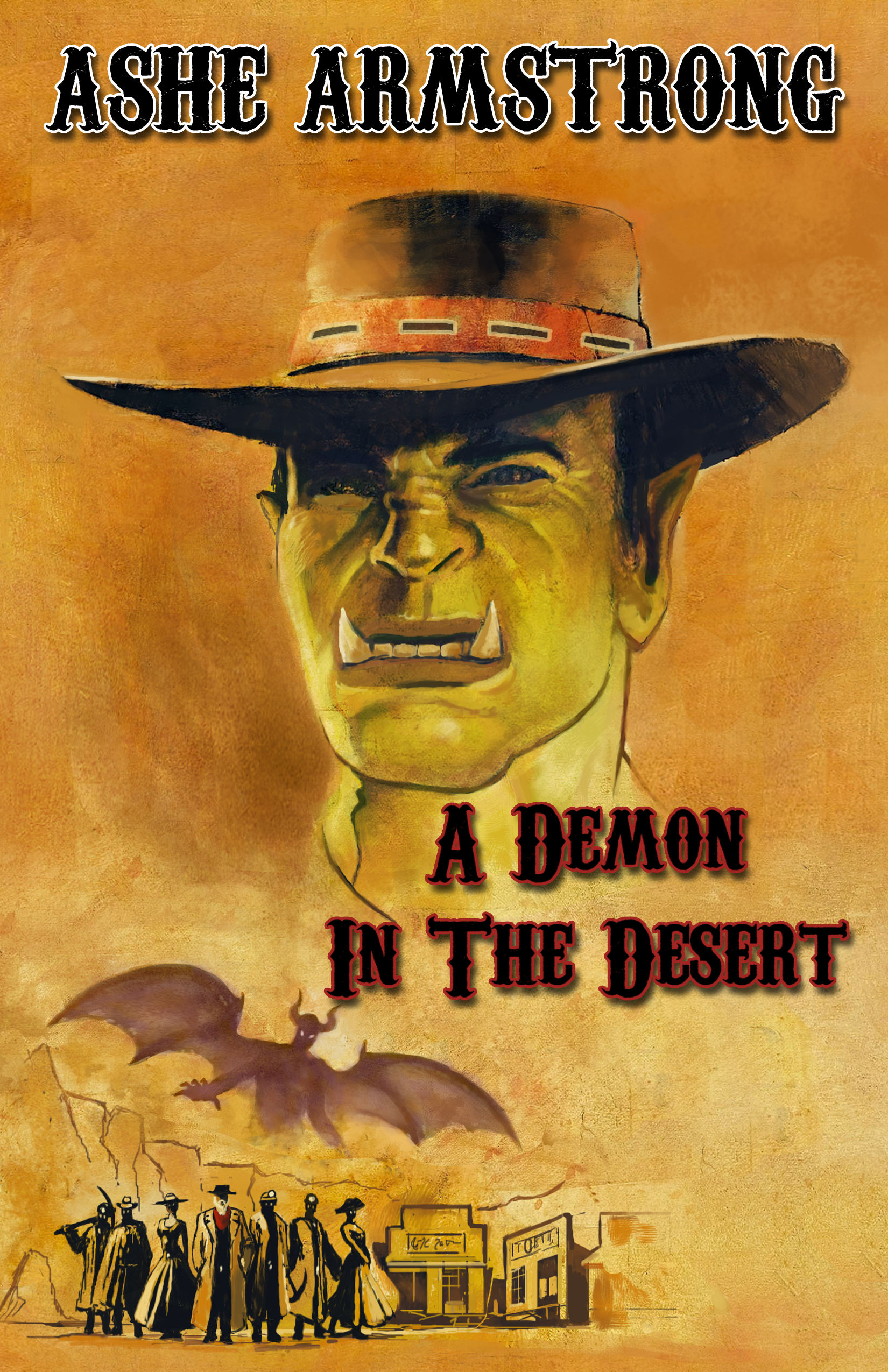
Things I Learned Writing A Demon in the Desert

I’ve been bouncing this idea around my head for a few weeks now, and especially after reading one of my kickstarter-backer reviews, and seeing the latest version of this from an author guest posting on Chuck Wendig’s blog, I figured it was time to get it out. There was a colossal amount of learning involved in this book. So I’m going to attempt to run through all of it. Some of it will be about kickstarter, some about writing a whole goddamn book, and some aspects of the business of being an author-publisher. I hope it’ll be helpful for any hopeful writers. So, let’s do this.

Writing

  • This will sound cliché, and it is, but after seeing various writers get the question (and me ASKING one or two), I feel it deserves first billing here. Do the writing. Ass to chair, fingers to keyboard. But here’s the thing some of us might not realize about doing The Work: you don’t have to bang out 1000 words a day. Especially if that’s not normal for you. If you have any sort of mental illness, it’s probably safe to say that this will be a struggle for you. It was for me. Some nights were easier than others. Some nights were outright battles just to get two sentences out. Which leads into the next point…
  • Set a minimum goal. When I started the book, it wasn’t even a book. It was a short story (or at least, I thought that’s what it would be). For the first couple of months, my daily goal was, believe it or not, just two sentences. Most of the time, I flew past my daily goal but having that goal was good. Cause Ass-to-chair and a daily goal adds up. And you can increase it as you’re able. I was still struggling a lot with depression, so two sentences was good. It was achievable, it gave me little bits of momentum, and they add up. You do The Work and it adds up. You write two sentences five days a week, sure, it’s not a lot over a month, but that’s not the point. Word count can be important but it’s not a taskmaster. You’re the writer, so if you feel like you’ll struggle at first, start small. There’s no shame in it. Each day, you’ll have more words than you had the day before. That’s how stories get done.
  • On the flip side though, you absolutely cannot force yourself. There were nights where I sat down and my brain was static. I could squeeze a few words out and each one felt wrong. Those are the nights where it’s better for you to just step back, go get a snack, and try to just relax. Especially if you have to deal with health issues. It’s important to realize that sometimes, you just need a small break. Related to this is that some nights, you get stuck and you gotta step back and chew on the story some. There were plenty of nights where I had ideas but when I started moving forward, I got stuck. One thing that helped me a lot was something Ed Erdelac recommended, though I’m not sure if I followed exactly like he suggested. When I got stuck, I’d drop down from the story and make plot blocks. I’d write out where I wanted to go in the most bare bones manner. “Jack meets Jill. Jill shows Jack the hill. A demon escapes the well at the top of the hill and pushes Jack and Jill down it. Jack’s corpse becomes the new home for the demon.” I was surprised at how much headway I made doing that.
  • And after all that, it does get easier once you start finding your stride. I was unable to focus on writing last June and December but once I got going again, I regained my momentum. By the time March rolled around, I felt like I was busting my ass, in a good way. I was hitting 500-1000 words a night and that does feel good. You learn tricks as you go, like the plot blocks, and you learn to recognize your work habits. Just keep going. And remember…
  • FIRST DRAFTS DON’T HAVE TO BE AMAZING. Yours might be, mine wasn’t. Mine was garbage. But it was a start.

Kickstarter

  • I’ve said this to everyone who would listen because, quite frankly, I jumped the Kickstarter gun way too damn soon. DO NOT start your campaign unless you have at least two drafts done. Bare minimum, if you just can’t stand it, or if you’re actually experienced with everything BUT running a crowdfunding campaign, make sure you have a finished first draft. I know that this sounds incredibly obvious. “No duh, Ashe, who’s that dumb?” Hi. I am that dumb. My first draft wasn’t even finished when I started my campaign. Hell, I didn’t even write The End til March this year. This hurt the book because…
  • I vastly underestimated how much work I had to do when I started the campaign. Originally, I had planned to release A Demon in the Desert in March. That is freaking ridiculous. That is…unreal. But by the time I figured that out, I’d reached 100% funding somehow and then I was stuck. Now, I know that my friends would’ve understood if I’d said “I can’t release the book til late summer” but my friends would’ve been thrilled (and were thrilled) to read my poo poo first draft. But between how much work I had left and the fact that I had to orchestrate a move from Tulsa, OK to Auburn, AL meant that there was no way I would meet a March deadline period. So I begged forgiveness and said I’d shoot for a late June release.
  • So you’re gonna start a kickstarter campaign. Are you 100% prepared? No, no you’re not. And there’s no way to be 100% prepared but you can get close. You can set a full campaign up without making it live. And if you’ve never done one before, you’ll definitely want to do this since you’ll have to set up an Amazon Payments account to receive the funds should you hit 100% funding. That can take a few days to a week to process. And what about promotional material? Do you have a cover? Do you have promo art? Do you have reading samples? Are you prepared to make regular updates? Have you planned out your rewards and prices? Do you have a budget? Did you then factor in the processing fees that Kickstarter and Amazon take out? You’ll want to do that. I set my goal for $850 dollars and ended up with $775 after processing. Now, I ended up doing things a little different than I originally planned so it worked out but trust me, it’s better to be over-prepared. And while we’re on money…
  • You’ll still need more than you think when you’re setting things up. Because if you’re new to the whole concept and business like I was (and still am), there are things you didn’t think about or factor in. Have you looked at editor costs? I had no idea about freelance editors. Not one. And editors don’t just make sure you use the right words or make sure the grammar’s correct. The full editing process involves a professional helping you hone the story, sharpening into a finely crafted weapon of feels. And what about a cover artist? Despite “don’t judge a book,” people absolutely do judge a book by its cover. And if you’re writing sci-fi, fantasy, or horror, you want, you need a good cover. You can find artists to fit all kinds of budgets (and editors too), but trust me, you want to include that in there if you can’t afford it out-of-pocket. I was fortunate enough to get the cover before the campaign because I already knew what I wanted it to look like and my mom was nice enough to help me pay for it. Someone said recently that my goal seemed “reasonable.” Making a book is actually pretty expensive and I undersold myself. Be transparent about the costs too. Budget breakdowns are helpful to backers.
  • So you’ve started the campaign, how do you get backers? Well, you definitely don’t run around anywhere you can find posting about it. I have learned much about self-promo and the biggest aspect of doing it is presentation. When you’re a newbie, you have to rely on friends, and family if you’re able, and then you have to go out and you have to find your audience as best you can. And you’re gonna want to focus if you can. If you decide to take to goodreads, like I did, don’t join any and every group that has some connection to what you’re writing. Pick one that lines up the most and then, before you promote at all, engage the group. Get a feel for them, learn the rules. Cause, believe it or not, lots of authors (and I definitely hold myself accountable here) show up to goodreads groups like locusts. Don’t do that. Pick your avenues carefully and deliberately. Then realize that you’re probably going to get ignored a lot. Here’s some good tips on self-promotion in general from Michael J. Sullivan.
  • Give yourself plenty of time to do EVERYTHING. If you offered signed paperbacks as a reward, give yourself time to sign them, and box them, and label them, and ship them. Give yourself time to finish the project. Six months post campaign end isn’t unreasonable. You might want to say longer and hey, if you’re ready sooner, then everyone gets a pleasant surprise.

The Business

  • You want an editor. You need an editor. Yes, they’re expensive, I know, it sucks. I had no idea at first but it’s not uncommon for an 80,000 word book to cost $2000 for editing. Thankfully though, there are freelancers who understand and will offer payment plans. Though if you’re going the kickstarter route, this is one more reason to have at least that first, complete draft done. You’ll have a word count, which will give you an editing price, which will be a number you can slap on your budget for your campaign goal, which lets your potential backers know what they’re funding. Before I go on, I just want to make it clear that I am extremely proud of the work I did on this book. Is it a 5-star debut? Hell no. But I don’t think it would’ve been even if I’d had an editor. I had written on and off at various points in my life but this was the first time I really threw myself into it whole hog. So Grimluk’s first outing could’ve used a hard round of developmental edits on top of the proofing. But, that’s what this is all about: Things I learned.
  • Self-promotion is always hard. You have to find a balance for how much you do it and how and where and there are a lot of folks who don’t want to be told about your book from you. There are plenty who do though. I’ve come across plenty of folks in the orcs tag on tumblr who’ve shown huge interest in the book once I made them aware. But like I said earlier, that’s because I focused. Shotgun promotion just does not work. Which also means…
  • It’s gonna take for you to build an audience. It just is. Unless you can somehow hit the right buttons (or wrong buttons as the case may be) on your first try, you’re gonna spend a long time finding readers. The best thing you can do is keep writing and keep getting better and keep releasing stuff.
  • It’s okay to read reviews of your book but you have to keep something in mind about them: Even if it’s one of your crowdfunding backers, reviews are NOT for the author. They are for other readers. You can use them to become better but they are not attacks on you or for your ego. That way lies madness.
  • There is no setup for pre-orders via Createspace. You can set up pre-orders for the Kindle edition (and on Smashwords), but there is no pre-order for the paperback. And the whole process goes faster than you think. So, if you have a specific date in mind as a self-pubber, don’t release til that date. Get everything ready, order your proof copies, make any corrections that need to be made, and then wait til your allotted time. If I remember right, processing for the paperback and the Kindle took about 24 hours each once you hit “SUBMIT.”
  • And what about getting paid? Well, Createspace/Amazon payments take a while. Basically, you don’t get paid for three months, starting from the release day. Thankfully, once your pay cycle finally starts up, and you get your first royalties, it’ll be monthly thereafter.
  • I bought my own ISBN instead of using the free ones. I bought them directly from Bowker because $99 for one ISBN is ridiculous and a pack of 10 is less than $300. A pack of 1000 is less than $600 and would last you a very long time, especially if you only release via Createspace/Kindle. You have to have an ISBN for each format of your book, and since I put up an edition on Smashwords, I used three ISBNs. Ultimately though, ISBN is up to you. I read a few things that convinced me I should go that route but it is entirely up to you. The biggest thing about having your own is that you get to assign your Publisher, instead of it defaulting to whoever provided the ISBN (ie- “Published by Createspace Publishing Services 2015”).

Bits and Bobs

  • Michael J. Sullivan gave me a bit of advice one night in March: If you’re in the US, focus on Createspace/Amazon, cause that’s where you’re gonna make all your money. Originally, I had planned to have an extra edition through IngramSpark, in hopes of getting into bookstores. Honestly, there’s not a huge reason to do that anymore. Sure, it’d be cool to see yourself in a bookstore but it’s so easy to set up online now and you can always order a box of your books to sell yourself elsewhere.
  • If you do a print book, you should ABSOLUTELY make use of the Kindle Matchbook program and offer that bad boy for free. It’s how it should be at this point. If you buy a movie these days, it comes with a digital copy. You can rip any CDs you buy for later use, but there hasn’t been a way to do that with books until now. You don’t HAVE to do this, of course, but it’s a practice readers appreciate. Especially for the bigger books. There’s also a service called BitLit that’s designed for this as well.
  • To start with, you might look at other authors as “competition.” But here’s the thing: We’re not competing with each other. We’re all writing different things. Yes, we’re writers, but there are millions of people out there and you can find an audience. And the indie community is small. We’re not competitors, we’re a community. Support your fellow writers. SA Hunt tweeted one night that it’d be cool to start seeing indie writers recommend each other in their books. Fantastic idea! Utterly brilliant. So I did. I picked six folks, including Sam, that had helped me or encouraged me or that I had enjoyed reading (or some combo) and added a recommendations page to the back of the book. The ebook even has links to their websites. Cause we’re still readers too. We still get excited about reading a good story, so why not share that with your readers? It costs nothing and it builds good will all around.
  • Straight up: Being an author-publisher is not fucking easy. It’s not. You have to learn every aspect of the business. There are new sites and services now that can help you though. I’ve heard lots of praise for Draft2Digital from folks who either don’t have the time or can’t quite get their head around formatting a manuscript. I’m planning on using Rock and Hill Studio for the next Grimluk book (and probably every other book I publish) after talking to Matt Davis. He totally sold me on their services, which includes full editing, formatting, AND a cover, and the desire to elevate self-publishing as close as it can get to traditional publishing.
  • Beta readers CAN be helpful. You’ll have to figure out how many you can handle and how many notes you want from them yourself though.
  • If you use openoffice instead of Word, disregard every Word-based tutorial you find (which will be every Official tutorial). I found this tutorial very helpful: Part 1 & Part 2. Similarly, for formatting a paperback in openoffice, you want to save it in the default format, ODT I think. Here’s why: It saves your page styles. That is very, very, very, VERY important. Once you have everything formatted for print, export it to a PDF. Trust me. I fought with this for weeks before I figured out the problem. Using the ODT means all of your formatting stays put and gets locked down in the PDF.
  • You can, however, still use a DOC format for ebooks. There is no page formatting, only paragraph styles, and those stay put just fine.
  • Again, self-publishing is hard. If you don’t want to do it, that’s understandable. Polish that manuscript, read up on writing agent queries and cover letters, and start sending out queries. That will be hard too and you’ll need to send out A LOT of queries before someone bites (that’s why we have the advice “Get use to rejection”). They’re both hard but they’re different kinds of hard. And remember that just because your agent gets you published, it doesn’t mean you’re gonna get a huge advance. You might only get $5000, as opposed to $50,000.
  • Please remember that artists deserve every bit of what you pay them. I know that $200 seems like a lot for artwork for just the front cover, but a good cover can get you sales and backers and that artist works just as hard as you do. And like you, they’re probably underselling themselves in order to make any money at all.
  • My final bit of advice is that even if you want to do everything yourself, exert your independence like an independent motherfucker, you need to remember one thing: You cannot and should not do everything alone. You need support. You need editors. You need cover artists, and maybe a different person to design the cover layout. If you feel like you have it in you to tackle lots of what’s required to publish yourself, go for it, but be mindful and don’t be too proud to admit when you need help. Cause you will need help. Plan accordingly, do your research (whether for the story or the business side), be respectful and professional (you can still say “fuck” gratuitously), and don’t bite off more than you can chew unless you flourish that way.

I hope that all of this makes sense and helps anyone hoping to enter the world of pro-writing. This is just all the things I learned. Your mileage may vary and you may learn a whole other swath of things that I missed. I also may have forgotten something but I think I got the important stuff. Ultimately, traditional and self-publishing are tools. Neither is better than the other but self-publishing is harder if you’re not prepared. Good luck, and thanks for reading.

Minor Update + July Sale

Update time: Still no idea when Book Depository will have my book up but I’m still betting it’ll be the end of July at the soonest. On top of that, there’s five reviews up on goodreads and a sixth on its way soon.

In other news, I’ve also dropped the Kindle price to $1 USD, with coupons for the paperback and the Smashwords version. For the month of July, you can get the paperback via Createspace for 50% off using the code G4S9JCAB. For Smashwords, use SB57E. I will also be posting a link for a goodreads giveaway as soon its approved (I was hoping that would be today). The giveaway will be US only, I’m afraid.

On July 22nd, I’ll be doing an r/Fantasy Writer of the Day, which is basically AMAs for indie folks. I’m planning on giving away copies of the ebook to celebrate! That’s all for now.

Back to the Grind

By now, everyone should have their books, except for my one international backer who got a paperback. I’ll let you know when I have a delivery estimate. If you HAVE NOT gotten your book by tomorrow, please let me know immediately. I hope you all enjoy the book and that you’ll leave a rating and a review on Amazon and/or goodreads.

For the rest of the summer (at least through July), I’ll be working on shorts and promotion and getting the next Grimluk book ready. I’ve given thought to starting a Star Trek fanfic, mostly because it’s really hard to get into the official books from what I can tell. I have this idea I want to use that is based around an Orion woman. I’d really like to keep it Star Trek but I don’t know, maybe it would be a better idea to make it my own property instead. Maybe I’ll look around at options or maybe even try to use that as a starting point to looking for an agent.

In the immediate though, I restarted a short I’d begun in February but dropped out of to focus on A Demon in the Desert. It’s set in the same world as Demon but will be standalone. I really like the world and I can play around in it quite a lot. It stars an orc woman who’s good with a gun and has an issue with people routinely accusing her of cheating at cards. I think I’ll submit this one and earn some SFWA/HWA active member credit (it’s damn hard to do that with novels as an indie writer). So it might be a while before anyone gets to read it but I’ll post a snippet when it’s done. Just a small one.

I’m also still trying to figure out how to attract attention to my Patreon. I’m running a promotion right now for the first five level 1 patrons and the first two level 2/3 patrons. Level 1 patrons will get a flash story (1000 words or less) about anything they want. Level 2/3 patrons will get a short story (1000-5000 words) about anything they’d like.

Happy reading, everyone!

IT’S RELEASE DAY

cover imageFEAR RELEASE DAY, MORTALS.

That’s right. A Demon in the Desert is done and up for release. For my kickstarter backers, you will be getting your digital copies within the next 24 hours, and the paperbacks will arrive next week. I’ll get to work signing them and shipping them as soon as I have them.

For everyone else, well, you have several choices. For paperbacks, there’s the Createspace store, which nets me the most royalties.  Then, there’s Amazon, which has the advantage of Kindle Matchbook, which means you can get the Kindle version for free to go with the paperback. Word of warning at the moment though, the formats are still in the process of merging so if you order as soon as you see this, it might take a day or two to claim the digital copy. I’ll try to make sure everything’s aligned this week.  Your final option for purchasing a digital copy is Smashwords and the avenues they distribute with. So, for instance, you could find the book on Apple, Kobo, Scribd, and (sometime after this posts) Barnes & Noble. Some places are still getting set up.

Hopefully, for my European and International readers, Book Depository will have it fairly soon. That will ultimately be the best option for anyone outside of Europe because of their free international shipping. It’s also one of the venues I don’t have any control over.

I’m proud and a nervous mess but hopefully I wrote a story you’ll enjoy. And I guaran-damn-tee the next Grimluk will be bigger and better. In the mean time, if you’re more interested in shorter stories, check out my Patreon. I’ll be running a promotion this month too. The first 5 patrons for level 1 can claim a request for a flash story (max of 1000 words) for any topic. The first 2 patrons for tier 2 or tier 3 can request anything they’d like for a longer story (max of 5000 words).

Happy reading everyone!

Mother’s Day

I figured today might be a good time to say a very public thanks to my mother, what with it being Mother’s Day and all.  I wouldn’t have a cover for A Demon in the Desert if it wasn’t for her.  She gave the money last year, looking at it as an investment.  Means a lot to me and hopefully, one day, I can pay her back.  Thanks, Mom.

Progress!

Howdy, folks!  I haven’t really made any sort of news post since last week.  Haven’t had much to update on.  Today though, I’m happy to offer a few quick notes.

First, I’ve gotten a lot of writing done this week already.  I’ve been making really good progress with rewrites and should be done with chapter 10 this week.  I also wrote the next Patreon piece for next week.  It was pretty intense and will come with a warning.  I actually felt kinda bad writing it.  Anywho, I’ll be trying to do another one this week as well, trying to build myself a buffer.  And for those of you who keep up with things here, I’ll be posting the stories here after I post a new one on Patreon.  So, next Friday, when I put up the second story, I’ll be posting the first story here.

Secondly, more Patreon talk.  I’m still working out the model for it, so if you have any suggestions for rewards, anything you’d like to see, feel free to tell me.  I still haven’t gotten any patrons, but it’s early days so that’s okay.  I think for story releases, I’ll offer PDF downloads for patrons.  I’m also toying with doing readings of the current story the week after it’s posted.  I’ve been looking at some other writers’ Patreon models and getting ideas from them as well.  So, by the end of the month, I’m hoping to have something much stronger to offer.

Thirdly, I think I’ve gotten my medication routine down.  Things seem to be going smoothly and I’m mostly feeling a lot better than I have in a while.  Which, as you can see, is allowing me to get a lot more work done.  And man does that feel good.

That’s all for now.  Have a good week!

Writing Meme

On facebook this morning, Ed Erdelac​ tagged me for a SEVEN UNKNOWN THINGS ABOUT MY WRITING PROCESS meme going around.  So, I came up with seven things.

1) I have to get into the mood sometimes with music.  Sometimes, it’s just turning on something to click into writing mode and sometimes I have to set the mood with scene/story appropriate music.
2) I tend to write best with music.  I tend to favor instrumental stuff.  The God of War 2 soundtrack is a big one.  Karl Sanders’ solo albums, Saurian Meditations/Exorcisms are definitely ones I use a lot.  And years ago, I made a Deadlands playlist that consists of a lot of Ennio Morricone and various other artists.
3) I think this is fairly normal but I can’t really get going if someone can look over my shoulder or be up and moving around me.  I can counter this in public if I have a corner booth or something against my back or I’m using a notebook.
4) I have a leather journal that symbolizes a true, earnest start to being a writer.  I have two of my first short stories in it (“Dead Blood” and “System Crash”) as well as various little bits of note or scribbles.
5)  At first, I wanted to do all my first drafts in the journal but I’ve since grown comfortable with banging everything out on the keyboard and not editing as I go.  I was always bad about that when writing on the computer.  I’d get out a paragraph and then start changing it, derailing myself.
6) For new writing (new story, new section, new pagraph), sometimes it’s excruciating getting the first couple of sentences out.  But once I do, I usually start moving pretty easily.
7) This isn’t really “writing process” but I really feel like I’ve grown considerably in skill over the past year.  I’ve written more than I ever have and I’m reading stories from new friends and peers and I can feel myself growing much more confident and starting to find my own voice more.  It feels so good.

Welp, that’s me.

Moving Forward & Support

Hello again!  I hope you enjoyed the peeks at A Demon in the Desert you got over the month of March.  Things are coming along nicely and I hope to have a bigger update about the book by the end of the month.  In the meantime, I wanted to let anyone who’s interested know that I’ve started a Patreon.  I’m setting it up so that it doesn’t interfere with the writing of the book but that I can put out more content and keep honing my abilities.  How will I do that?  Will, twice a month, I’ll post a piece of flash fiction, between 500 and 1000 words long, or once a month, I’ll post a short story up to 5000 words long.  How much am I askin for this?  Two bucks a month.  I’m not even charging per story, just a base price of $2 a month for 2-5000 words.  The stories I post there will be exclusive until the next one comes out, and some stories might remain exclusive to Patreon.  I’m still figuring everything out.  It’s new territory.

I’ll be posting the first story this weekend, either Friday or Saturday.  First one’s free and I won’t just throw up an old story.  It’ll be brand spanking new.  All shiny and ready for you to read.  So, if you’re interested, just click the picture!

Support Ashe on Patreon!